
Live Selling: High online conversion rates and the logistics behind it

Live selling, also known as live shopping, allows brands to showcase and sell products through live video streams, combining digital entertainment, interaction and online shopping.
Live selling can generate conversion rates of up to 30%, although results vary depending on the platform, product category, audience and campaign execution. However, converting viewers into customers is only the first step. The logistics operation must be ready to manage product availability, order processing, dispatch, delivery and returns.
What is live selling: from Taobao Live to global commerce
Live selling, or live shopping, is a form of e-commerce that uses live video streams to showcase products, interact with consumers and enable purchases during the broadcast itself.
Although its popularity increased during the pandemic, the trend began gaining momentum in China in 2016, when Alibaba launched Taobao Live. The platform combined e-commerce, entertainment and real-time interaction, laying the foundations for a model that later began expanding into other markets.
The growth of live shopping is also taking place at a time when mobile devices are playing an increasingly important role in online shopping. In the first quarter of 2026, approximately three out of every four visits to retail websites worldwide came from smartphones. According to Statista, mobile devices also generated more than two-thirds of online orders.
In the United Kingdom, the conversion rate for visits to e-commerce websites fell from 2.2% in the second quarter of 2025 to 1.9% in the same period of 2026, according to Statista. Meanwhile, Business Research Insights predicts that the global live shopping market will exceed USD 250 billion by 2035, with a compound annual growth rate of 30%.
Live selling vs teleshopping: what has changed
Perhaps the closest comparison to live shopping is teleshopping, a well-established model that follows a similar concept.
Both formats involve someone presenting a product to an audience, explaining its features and demonstrating how it works. The main difference lies in the environment and, above all, the level of interaction.
While traditional teleshopping mainly offers one-way communication through television, live selling allows viewers to ask questions, leave comments, request demonstrations and interact with the brand in real time.
This format enables brands to promote their products in a less intrusive way, as users choose to join the broadcast themselves.

Live selling gives businesses an interactive way to present products, answer questions and support purchasing decisions in real time.
Key benefits can include:
- demonstrating products in greater detail;
- answering questions before the purchase;
- encouraging immediate action through live-only offers;
- collecting feedback through comments and questions;
- supporting product launches and promotional campaigns.
These benefits depend on careful preparation. Product availability, checkout, order processing, delivery information and returns must all be ready before the livestream begins.

For consumers, live selling combines entertainment, product information and shopping in one experience.
Viewers can:
- see products demonstrated in real time;
- ask questions before making a purchase;
- request additional information or demonstrations;
- interact with the host and other viewers;
- access offers or product launches available during the livestream.
Customers should also receive clear information about product availability, shipping costs, estimated delivery times and returns before completing a purchase.

How brands use live selling
Choosing the right live selling platform
Selecting the right platform is essential when developing a live selling strategy.
One of the main considerations should be identifying where the brand’s target audience is most active. Companies targeting younger audiences may find particularly engaged communities on platforms such as TikTok or Twitch, while other brands may choose Instagram or YouTube.
The aim is not necessarily to be present on every platform. Instead, brands should focus on the channels where their customers already consume content, interact and discover products.
Several platforms can be used to incorporate live selling into an e-commerce strategy. Some of the most popular include:
- TikTok Shop: known for its product discovery capabilities and strong connections with younger audiences and content creators.
- YouTube: suitable for demonstrations and more detailed content that can continue generating views after the livestream has ended.
- Amazon Live: allows brands to present products live and enables customers to purchase them within the marketplace.
- Instagram and Facebook: allow brands to make use of their existing communities and live video formats to showcase products and support product discovery.

Influencers, live chat and exclusive offers
There are also specialist live shopping platforms that can be integrated directly into online stores, giving brands greater control over the customer experience and customer data.
Selecting the right host is also important. Many brands work with influencers to increase the reach of their broadcasts. However, micro-influencers can offer particularly close connections with smaller, highly engaged communities.
Interaction is key during these broadcasts. Users expect to be able to ask questions, request additional information and communicate with the brand through live chat. This conversational element distinguishes live selling from a standard product page and can enrich the customer experience before a purchase is made.
Exclusive offers also play an important role. Promotions available only during the livestream, special discounts or product launches exclusively accessible to viewers can create urgency. They can encourage both immediate conversions and participation in future broadcasts.
Live selling examples from beauty and retail brands
Live selling is particularly useful in categories where demonstrations, recommendations and real-time questions can support purchasing decisions. Beauty, fashion, electronics, food, homeware and other consumer goods can all benefit from this format.
L’Oréal
L’Oréal has used livestreaming and live shopping to connect product demonstrations, expert advice and online shopping. The company has also developed shoppable shows for salon professionals, featuring product launches, practical advice and limited-time offers.
Sephora and Too Faced
Sephora has used YouTube livestreams to present beauty products with participating brands, including Too Faced.
Carrefour
Carrefour has used live shopping across product categories including food, toys, beauty, electronics and home appliances. Its live events have also been linked to commercial moments such as Black Friday, Christmas gift guides and seasonal promotions.
These examples show that live selling can support different products and campaign objectives. However, each event needs accurate stock information, reliable order processing and delivery options that match the promises communicated during the livestream.
The logistics behind live selling
After the livestream: fulfilment and integrations
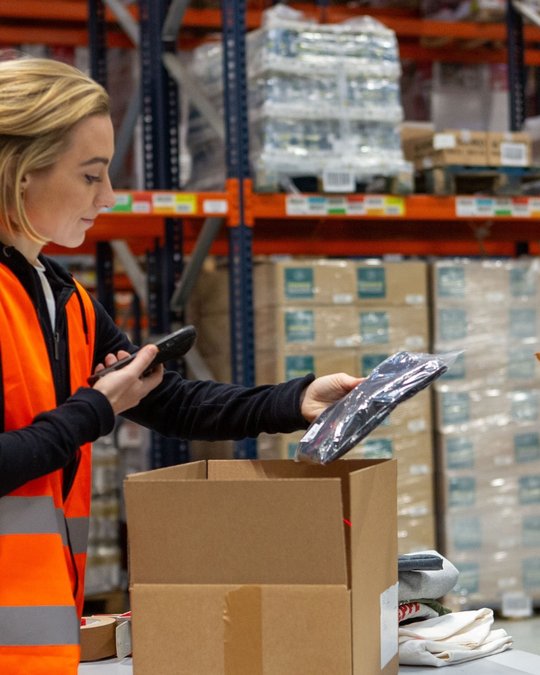
The sale does not end when the livestream finishes. From a logistics perspective, this may be precisely when the most complex part of the campaign begins.
Orders generated during the broadcast must be transferred correctly from the sales platform to the systems responsible for processing them, preparing the parcels and arranging their delivery.
For this reason, integrations between the sales channel and logistics operation are particularly important. Automatically transferring orders reduces the reliance on manual processes and speeds up order preparation.
Inventory synchronisation is also critical. When several people purchase the same product at the same time, availability must be updated quickly to avoid overselling.
Furthermore, promises made during the livestream, such as a specific delivery time, must be aligned with the operation’s actual capabilities.
Ultimately, a campaign’s performance does not depend solely on how many sales it generates during the broadcast. It also depends on the company’s ability to fulfil those orders correctly afterwards.
TikTok Shop and discovery commerce
The growth of live selling is part of a wider evolution in e-commerce towards what is known as discovery commerce.
Consumers do not always begin the purchasing process by actively searching for a product. Increasingly, consumers discover products while viewing content on social platforms.
TikTok Shop is one of the main examples of this evolution because it reduces the number of steps between discovering a product and purchasing it. Content, recommendations, interaction and checkout can all form part of the same environment.
For brands, this reduced friction means that elements such as available destinations, shipping rules and returns must be defined before a campaign is launched.
Spring GDS explores this model and its implications for e-commerce in more detail in its article on TikTok Shop and logistics for social commerce.
As sales generated through social platforms increase, clear reverse logistics processes also become more important. These processes help brands maintain a consistent customer experience after a purchase.

Two key decisions for live selling logistics
The logistics behind live selling can be organised in different ways, depending on the sales channel, available infrastructure and expected order volume. Rather than selecting one fixed logistics model, brands need to make two key decisions: where customers complete their purchase and who manages fulfilment.
Decision 1: Where does checkout happen?
Brands can either direct customers to their own online store or allow them to complete their purchase within the social platform.
Option 1: Checkout through the brand’s online store
In this approach, the livestream generates interest and traffic, but customers complete their purchase through the brand’s own e-commerce website.
| Advantage | Risk | When it can be used |
|---|---|---|
| The brand retains control over the checkout process, customer data and carrier selection. | Customers may abandon their purchase when moving from the livestream to the online store. The website must also be able to handle a sudden increase in traffic. | When the brand primarily uses live selling as an awareness channel or does not yet offer checkout within the platform. |
Option 2: Checkout within the platform
In this approach, customers complete their purchase within the social platform where they are viewing the content.
| Advantage | Risk | When it can be used |
|---|---|---|
| It reduces friction between product discovery and purchase. | Shipping rules, stock availability and returns depend on the platform being configured correctly. Additional restrictions may also apply to cross-border operations. | By social-first retailers that are scaling their sales within a specific market. |
Decision 2: Who manages fulfilment?
Regardless of where checkout takes place, the brand must decide whether to manage fulfilment internally or work with a specialist logistics provider.
Option 1: Checkout through the brand’s online store
The brand manages inventory, picking, packing, shipping and carrier selection using its own operations and infrastructure.
| Advantage | Risk | When it can be used |
|---|---|---|
| The brand retains direct control over its inventory, order preparation and customer experience. | Sudden peaks in order volume may put pressure on warehouse capacity, staffing and carrier management. | By brands that already have the infrastructure and resources required to manage fluctuations in order volume. |
Option 2: Fulfilment managed by a logistics provider
The brand works with a specialist provider to manage picking, packing, shipping and carrier management.
| Advantage | Risk | When it can be used |
|---|---|---|
| This approach makes it easier to scale order preparation and dispatch during campaigns with high demand. | It requires reliable integration with sales systems and accurate, up-to-date inventory data. | By established e-commerce businesses adding live selling as a new high-volume sales channel or by brands that do not have sufficient internal fulfilment capacity. |
Start small before scaling
These decisions do not need to be implemented at full scale immediately. A company can begin with a limited number of live selling campaigns, products or markets while testing whether its operations can respond effectively.
| Advantage: | Risk: | When it can be used: |
|---|---|---|
| Starting small allows the brand to test its checkout, inventory, fulfilment and delivery processes while protecting the customer experience. | A limited initial rollout may temporarily reduce the channel’s reach and conversion potential. | During the first live selling trials, when entering a new market or before launching larger promotional campaigns. |
Checklist before a live selling event
Before starting a livestream, check the following:
- Inventory: Product availability is up to date across all channels used during the livestream.
- Order flow: Sales from the platform are transferred correctly and automatically to the systems responsible for processing them.
- Shipping: The selected services and their cut-off times are suitable for the expected order volume.
- Delivery promise: The delivery times communicated to customers are aligned with the operation’s actual capabilities.
- International shipping: Destinations, costs, conditions and potential duties have been defined when the audience includes cross-border customers.
- Returns: A clear reverse logistics process is in place for both domestic and international returns, where required.
- Customer service: The team understands the campaign’s conditions and can answer the main questions relating to shipping and delivery.
Key takeaways for e-commerce brands
Live selling combines content, interaction and shopping and can achieve conversion rates of up to 30%.
Its success depends both on the ability to generate sales and on the subsequent fulfilment of those orders.
Connected infrastructure enables orders to move more smoothly from the social platform to preparation and delivery.
TikTok Shop and other discovery commerce models reduce the distance between content and purchase, making it necessary to prepare operations before launching a campaign.
Delivery, returns and the post-purchase experience are crucial for transforming a one-off sale into a lasting customer relationship.
FAQ
Can small e-commerce businesses use live selling?
Yes. Smaller businesses can begin with short livestreams, a limited selection of products and controlled promotions. This allows them to test customer interest and their operational capacity before running larger campaigns.
Can live selling be used for cross-border e-commerce?
Yes, but brands should define the available destinations, shipping costs, estimated delivery times, potential duties and returns conditions before the livestream begins. This information should also be clearly communicated to customers.
How can brands prepare for a sudden increase in orders after a livestream?
Brands should keep inventory information up to date, automate the transfer of orders to their processing systems and make sure that fulfilment and delivery capacity can handle the expected volume. Customer service teams should also be prepared to answer questions about shipping and delivery.
What delivery information should brands communicate during a livestream?
Brands should clearly explain where they deliver, the expected delivery times, shipping costs and any conditions that may apply to international orders. Delivery promises made during the livestream should reflect the operation’s actual capabilities.
How should returns from live selling campaigns be managed?
The returns process should be defined before the campaign begins. Customers should receive clear information about how to return an order, applicable deadlines and any conditions or costs, including those related to international returns.


